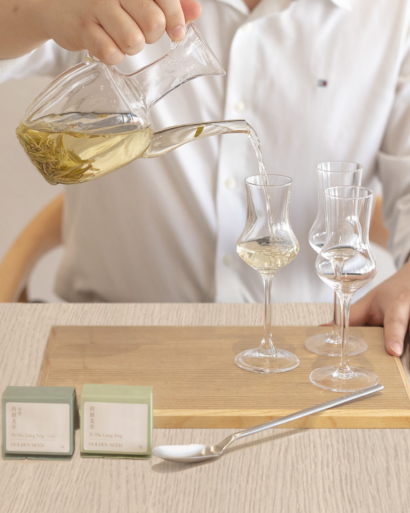
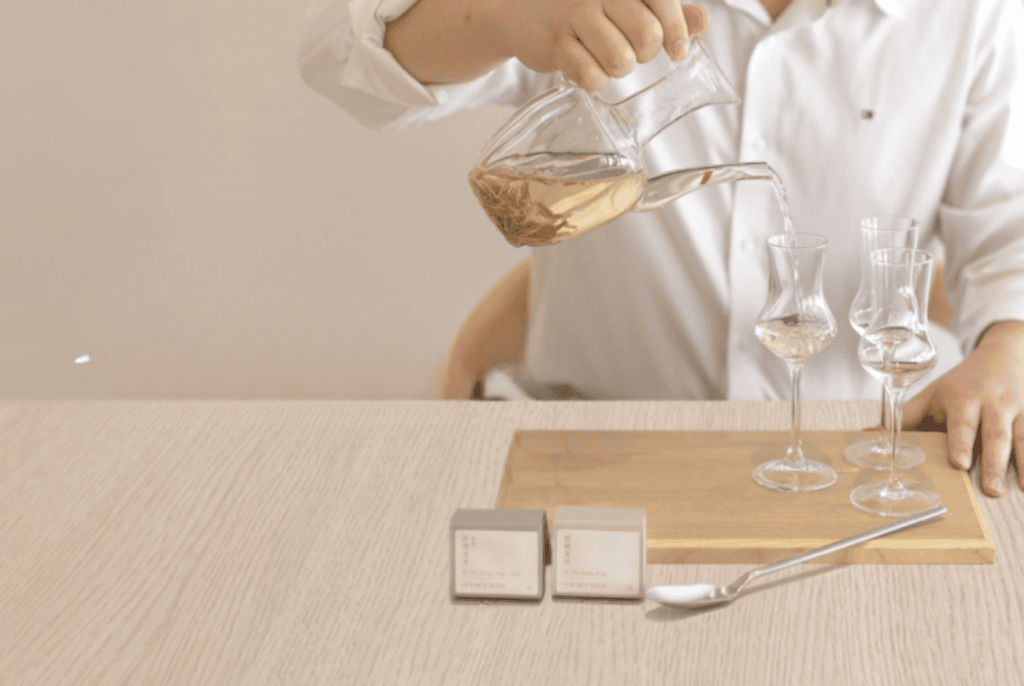
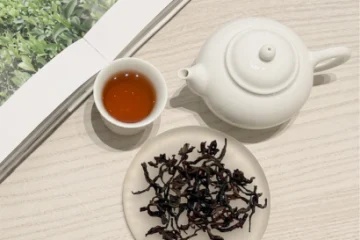
Here’s one thing we tell everyone who comes to a tasting with us: you don’t need to know anything about tea to taste it properly. You just need to slow down a little.
Tasting tea well comes down to paying attention. And Long Jing — with its layered, evolving flavour — is an incredibly rewarding tea to pay attention to. Here’s a simple guide to what to notice, and why it matters.
Start Before You Sip: The Dry Leaf
Before adding in water, take a moment to look at the dry leaves. Authentic Xi Hu Long Jing leaves are distinctive: flat, slightly glossy, and a deep jade green. They should look almost hand-pressed — because they are, palm-roasted by a skilled tea master in a hot wok.
Bring the dry leaves close and breathe in. You might catch a very faint toasty quality — that’s the roasting process. Underneath it, there’s a fresh green note. Some people catch a faint sweetness even at this stage. These are all good signs.
The Water Temperature Matters More Than You Think
One of the most common mistakes with premium green tea: water that’s too hot. Boiling water (100°C) will scald the leaves and produce a bitter, flat cup. For Xi Hu Long Jing, a temperature of around 80–85°C tends to work best. If you don’t have a thermometer, just let your boiled water sit for 3–4 minutes before pouring.
The First Pour: Let It Open
Use a glass cup or a small white porcelain gaiwan if you have one — something that lets you see the colour of the liquor. Pour gently. Watch the leaves as they unfurl and begin to sink slowly. The water will turn a pale jade-green.
For the first infusion, Steep for 60 to 90 seconds. Don’t rush it, but don’t over-steep either. Long Jing is delicate and it responds best to a lighter touch.
What to Taste For: A Simple Framework
- Sweetness or freshness? Long Jing should open clean and slightly sweet.
- Look for that characteristic umami warmth — a subtle savouriness underneath the sweetness.
- This is where quality shows. A good Long Jing has a lingering 回甘 (huí gān) — a sweetness that returns 10–15 seconds after you swallow.
- Fine Long Jing has a silky, rounded mouthfeel. If it feels thin or sharp, it’s likely lower quality or over-steeped.
Multiple Infusions
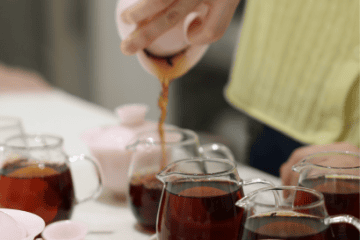
Don’t throw away your leaves after one infusion. A quality first-flush Long Jing will yield 3–4 good infusions, each one slightly different. The second infusion often opens up more fully. The third tends to be softer and more subtle. Notice how the character of the tea shifts as you go — that evolution is part of the pleasure.
The Best Way to Learn: Taste It With Someone
All of this is easier to understand in person than in writing. That’s why our workshops exist — not to lecture, but to taste together and talk about what we’re noticing. Whether you come on your own or with friends, whether you’re brand new to tea or have been exploring for years, there’s always something to discover in a good cup.
This April is a rare opportunity to taste a genuinely exceptional Long Jing. We hope you’ll join us for a cup.
Tea enthusiast? Book a tea tasting or experience workshop at Golden Seed this April. Ask us about our intimate 6-pax tasting sessions featuring the core-region first flush.